Our craft
Hot foil
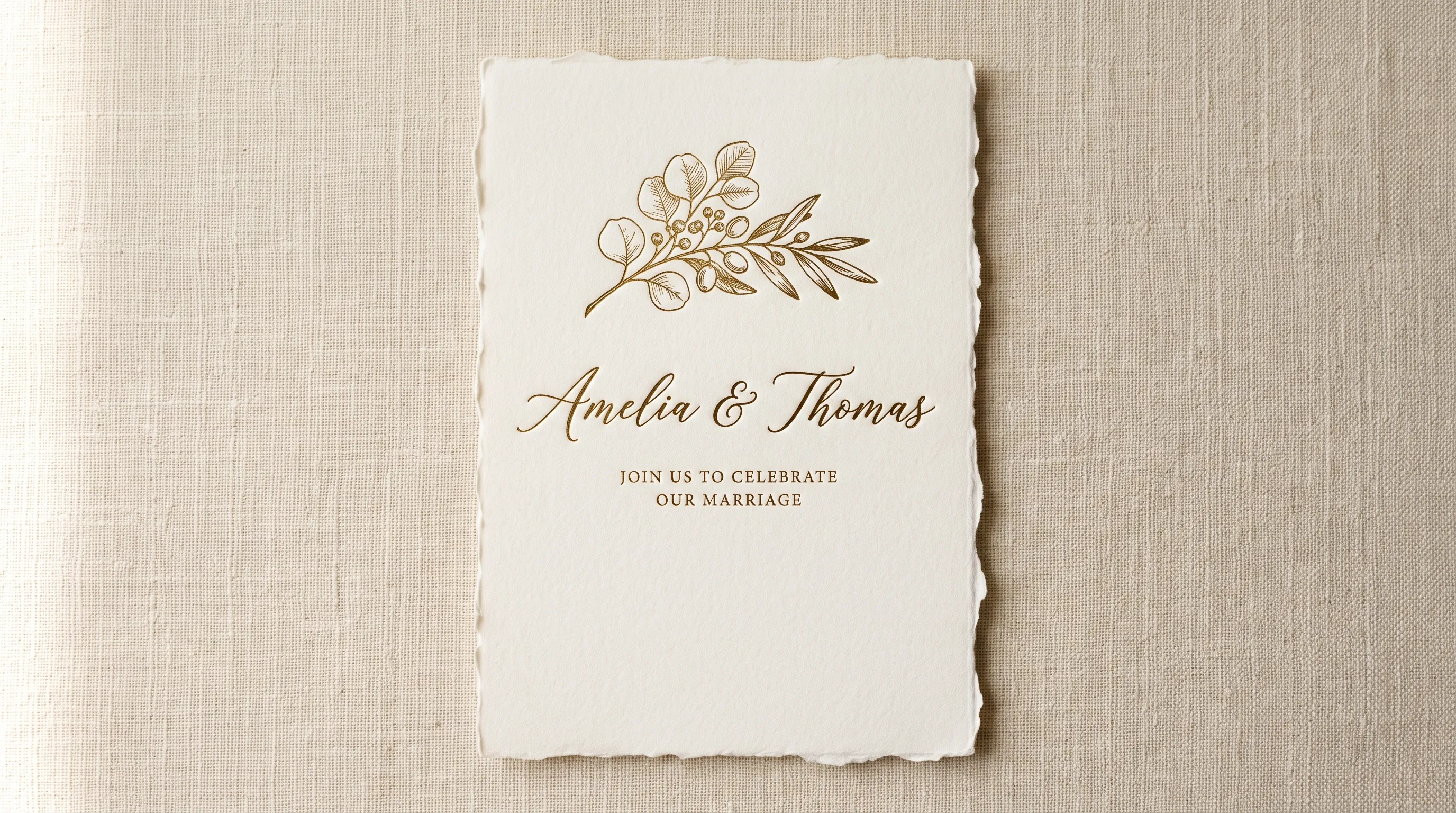
What hot foil is
Hot foil printing presses a metallic foil into paper using a heated metal plate and real pressure. The foil bonds only where the plate touches, leaving a mirror-bright mark sitting slightly below the surface of the sheet. It is not ink and it is not printed on top: it is a thin layer of metal fused into the fibre, which is why it catches the light as you tilt it and why a photograph never quite does it justice. Because each sheet is fed and pressed by hand, one at a time, no two are perfectly identical. That is the point. It is the finish most couples picture when they imagine a wedding invitation that feels expensive to hold, and it is the technique we use most.
The press
Every foiled piece that leaves our studio has been fed into the press by hand, one sheet at a time.
Our press is a hand-operated foiling press built in the 1980s. It has no automatic feed and no digital anything. Vee sets the plate, brings the heat up, and works through the stack sheet by sheet, checking the impression as he goes. A run of one hundred invitations is one hundred separate pulls.
That is slower than a machine, and it is the reason the result looks the way it does. The pressure is adjusted by feel, so the foil sits properly into the fibre rather than skating over the top of it. On a thick cotton stock you can run a thumb across the lettering and feel where the metal has been pushed in.
What it goes well with
- Blind debossing, so the pattern is felt and the lettering is seen
- Vellum wraps and silk ribbon
- Wax seals in a matching metallic
Questions about hot foil
Which foil colours can we have?
Gold, rose gold, copper, silver, and a range of colours including navy, sage, blush and black. Coloured foils are matt or satin rather than mirror-bright, so they read as quieter than gold. We will send you samples of any you are considering before we print, because foil looks different in a photograph than it does in your hand.
Can we mix foil with other printing?
Yes, and it is one of our favourite combinations. Foil for the names and the key lines, blind deboss for a pattern or a border, so one part of the design is seen and the other is felt. Each finish needs its own plate and its own pass through the press, so it adds to both the cost and the lead time. We will tell you exactly what it adds before you commit.
Does foil work on any paper?
It works best on uncoated cotton and ivory stocks, which are soft enough to take the impression. It struggles on heavily textured or coated papers, where the foil cannot make full contact and the mark breaks up. If you have your heart set on a particular stock we will test it before we quote.
Thinking about hot foil?
Tell us about your wedding and we will send samples of the finishes you are considering, so you can judge them in your hand rather than on a screen.