Our craft
Embossing and debossing
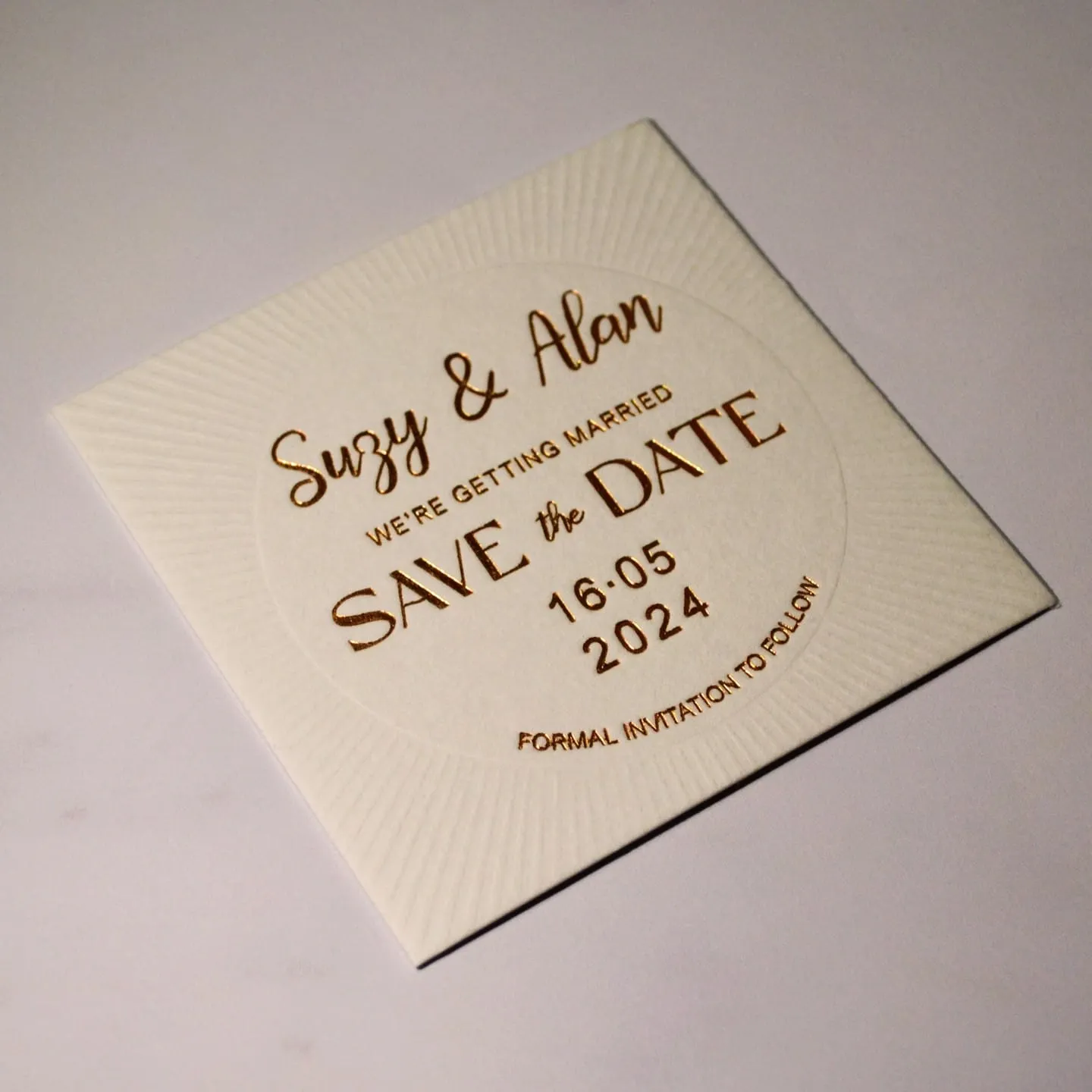
What embossing and debossing is
Blind embossing raises an area of paper; debossing presses it down. Both use a metal plate and pressure, and both are called blind when no ink or foil is involved, so the mark is made purely by shaping the sheet. The result is almost invisible face-on and very obvious the moment light moves across it or you touch it. It is the quietest thing we do. Couples usually choose it for a pattern, a border, a monogram or a venue illustration sitting behind or beside foiled lettering, so the invitation has something to discover as well as something to read. Photographs struggle with it, which is exactly why it feels like a secret in the hand.
How to see it
This is the finish you notice second.
Blind work has no ink and no foil. All that happens is that a metal plate is pressed into the sheet, and the paper keeps the shape. Face-on under a flat light you might miss it entirely. Tilt the card, or run a thumb across it, and a pattern appears that was there the whole time.
Because there is nothing to see except a shadow, the paper does most of the work. A thick, soft cotton stock holds a crisp edge and gives the shadow somewhere to sit. A thin or heavily coated sheet springs back and loses it.
What it goes well with
- Hot foil, so one element is seen and the other felt
- Heavy cotton stock, which holds the shape
- Plain envelopes, letting the card do the work
Questions about embossing and debossing
What is the difference between embossing and debossing?
Embossing pushes the paper up towards you, debossing presses it away. Same plate, same press, opposite direction. Debossing is more common on wedding stationery because it sits flat in an envelope and does not catch when cards are stacked or posted. Embossing has more drama close up but is more easily flattened in the post. We will usually suggest debossing unless there is a reason to do otherwise.
Will it show up in photographs?
Only in the right light. A blind deboss is a shadow, not a colour, so a flat overhead photo with soft even lighting will hide it almost completely. Photographed from an angle with a single hard light it is unmistakable. If your photographer is shooting your stationery flat-lay, mention that there is a blind finish so they can light for it.
Can we have it on coloured or dark paper?
Yes, and it often works better. On a deep colour there is no ink or foil competing with the shadow, so the impression is the only thing happening on the sheet. Dark stocks with a blind deboss and nothing else are among the most understated pieces we make.
Thinking about embossing and debossing?
Tell us about your wedding and we will send samples of the finishes you are considering, so you can judge them in your hand rather than on a screen.